Customer Ratings & Reviews

- Model:
- Q350WH
- SKU:
- 5913613
Rating by feature
- Value
Rating 4.6 out of 5 stars
- Quality
Rating 4.8 out of 5 stars
- Ease of Use
Rating 4.9 out of 5 stars
Customers are saying
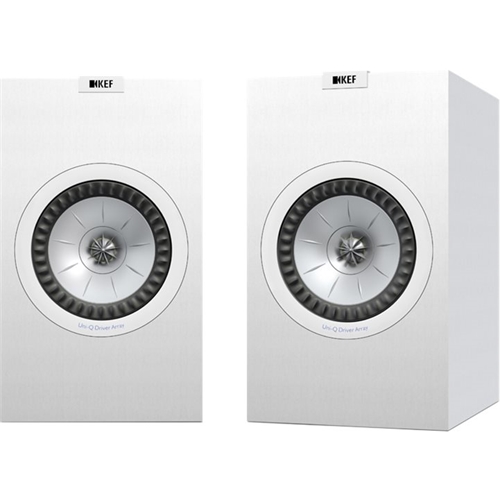
Customers admire the Q Series 6.5" 2-Way Bookshelf Speakers (Pair) for their excellent sound quality. Reviewers say that the speakers sound fantastic and deliver a wide, detailed soundstage. There are no cons mentioned for this product.
This summary was generated by AI based on customer reviews.
Where's the treble?
||Posted . Owned for 1 month when reviewed.This reviewer received promo considerations or sweepstakes entry for writing a review.In my system, using a Rotel RA12 to power them, I felt like the Q350s were a bit lifeless. Treble was lacking, the midrange was congested, and the bass was boomy. I put the plugs in the bass ports to tame the bass and that helped a little, but then I needed a subwoofer. I like an open and clear treble, which in my experience the 350s did not have. These speakers seem to be aimed at folks who like full mids and boomy bass. In my setup I couldn't get excited about the 350s so I took them back. My Klipsh R51Ms, while not having the same mid-range capability sounded better in both the bass and treble departments.
No, I would not recommend this to a friendThey're musical, mostly
||Posted . Owned for 11 months when reviewed.This reviewer received promo considerations or sweepstakes entry for writing a review.Some dialogue lost if you're going to use this for tv/movie and 2 channel config. I recommend the Q150's- they have a bit better detail with dialogue.
I would recommend this to a friendDecent speaker
||Posted . Owned for 2 months when reviewed.This reviewer received promo considerations or sweepstakes entry for writing a review.Got them for $500 on sale. Sound didn’t blow me away but they look nice displayed
I would recommend this to a friend
Not at this price
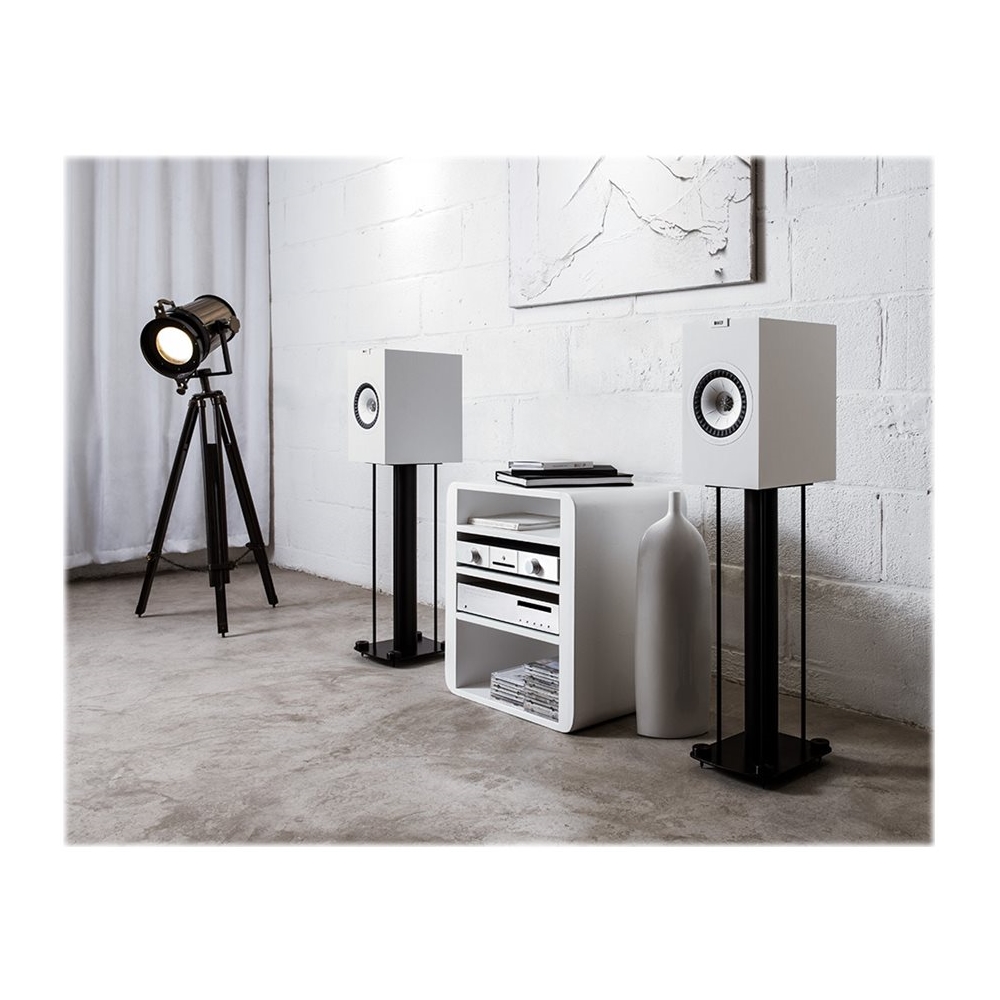
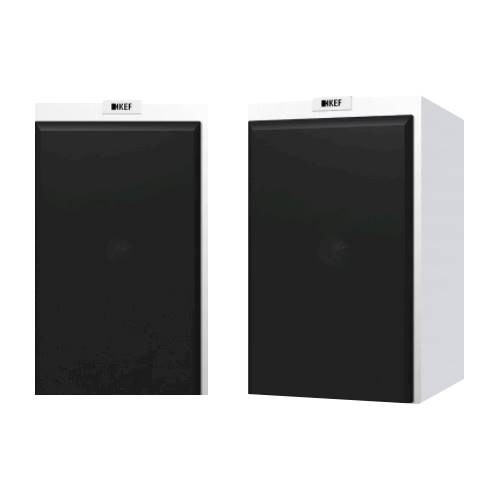
|Posted .This reviewer received promo considerations or sweepstakes entry for writing a review.KEF - Q Series 6.5" 2-Way Bookshelf Speakers (Pair) - Satin White The KEF Q350 bookshelf speaker has a 6-1/2” full range driver and a 1” aluminum tweeter. Frequency response is stated as free field 42Hz to 50kHz. It starts changing as you add open cell foam port plugs. I found the open cell port plugs to offer nothing to my room acoustics, so I did not use them. The speakers do not come with any covers (grills), and as far as I could tell KEF does not make them in white ( I could be mistaken about that, but I couldn’t find them in white).The speaker is stated as 8 ohms but is measured out at 3.7 ohm, this is not hidden, it is clearly stated in the manual. The low end of the frequency does not cut off until below 32Hz. There are a few frequencies that have extreme drop offs. I’ll just put in 2, there are others. 213Hz and 288Hz drop quite noticeably. There are also a few spots where there is cabinet rattle. Again, I’ll just put in 2, 144Hz and 92Hz. Please note that adding the open cell foam port plugs changes nothing about this. All testing done was with 2 different amps to ensure a non-biased opinion. The first amp is an early 70’s Marantz capable of 45 watts per channel into 8 ohms. The second is a Yamaha natural sound amp capable of 125 watts per channel into 8 ohms with clipping indication. I know I’m about to catch a bunch of slack over this review, but here goes. My main setup is a set of B&W tower speakers. They are also driven by a different Marantz amp. The B&W tower speakers are power hungry. If you want to get the best out of them nothing but 25 watts and up will do (driven power). If you don’t know what 25 watts sound like you should spend some time with a true stereo shop, 25 watts is very loud. The main reason you need and amp that has over 100 watts of power is to be able to drive power hungry speakers at lower levels and still get beautiful sound. The amp needs to have the ability to push a power hungry speaker. I tested the KEF Q350’s with both of the first 2 mentioned amps and at varying levels. With and without port plugs, and moved around the room. My best sound was about 1 foot from the back and side walls. Toed in about 2 inches, on 30 inch stands, 10feet apart with the listening area about 13 feet in front of them. This setup was so not ideal for the room but seemed to be ideal for best sound, so for testing I stuck with that. The KEF’s required more power than I would have liked. At my normal listening level they did not produce acceptable sound. Once turned up a bit more they came into their own. So now I’ve established that they will require more power and be louder than I would like to get the best sound, ok next move. Now before I go on let me say that I ran these speakers at normal listening levels for about 8 hours, on and off, before I started pushing them. I picked 2 songs I listen to a lot so I knew what I was expecting to hear at higher levels. As I increased the volume I noticed something I did not care for, the treble seems to be getting covered up. Is this a by product of the tweeter being in the center of the driver? To this point I had been listening to them flat, no equalization. I added in a bit more treble and was able to overcome this coverup at the higher levels but when turned back down the treble would try and split your head open. So some balancing needs to be done. Turning the volume up to a level that is unacceptable for the room I’m in I noticed voice coil bottom outs. What? How was that even possible with the early 70’s Marantz amp. There speakers are rated at 15-120 watts. I took this as a sign that the amp must be clipping at this level. So I switched out the Marantz that has no clipping indication with the Yamaha, larger amp, that has clipping indication. Now I’ll see the clipping and sort out what’s going on. Again just above the level that would be acceptable for this room, coil bottoms, hard cracks ( you know what coil bottom sound like). I rechecked the polarity on the speakers to see if I was doing this. No, they were correct. So very carefully I did it again and watched in amazement as the coil bottom seems to be happening and the full extension of the cone, not the other way around. This mean the spider is being over extended and pulling the voice coil into the magnet. On closer inspection I noticed that at that level the distance between the tweeter and driver cone seemed to vanish. Could the cone be malforming and striking the tweeter? I decided to measure the driven wattage at the point when this is happening. 24 watts, no clipping using an external audio watt meter, not a VU meter. The audio watt meter holds about 1 second of power internally that is driven to the speaker to give you the average at that time. To be clear, 24 watts could be as much as 30, or as little as 18. My bottom line is if you are going to be using these as a main set of speakers check carefully that your listening habits will get along with these. For my use they are going back in the box. Not because of the coil bottom (or what ever is making the noise) because that is well above the level for this room. But because I have to push them too hard to get good sound from them and I know they could never be moved to the living room where they would be pushed. Here is the part that really sucks. I now have to put my Polk Audio Monitor Series 2 M4’s back up. I know in my heart these KEF’s should have beat the pants off the Polk’s. But the Polk’s have such a warm full sound at a normal listening level I’m being forced back to them.
No, I would not recommend this to a friend